Updated
Media & crisis communication
How do you stay composed in a hostile media interview?
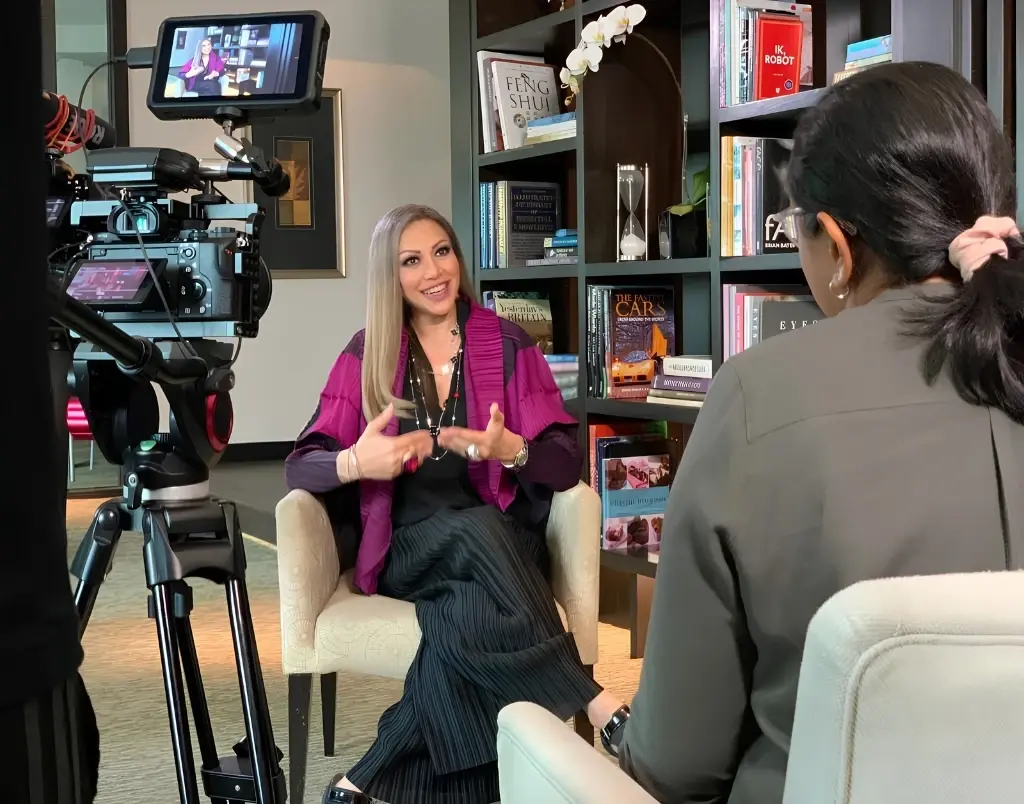
Stay composed by treating the interview as a test of your state, not your speed. Slow your breathing, keep your posture still, pause briefly before each answer and reply in short, precise statements. On camera, composure reads as authority, and fewer words leave fewer lines to be quoted out of context.
By Dr. Sharifah Shawati, J.S.M.
Published
Key takeaways
- Do not match the interviewer’s volume or pace; that hands them control.
- Act as a “calm engine”: slow breathing, still posture, measured replies.
- A brief, deliberate pause before answering takes control back.
- Short, high-impact statements are harder to take out of context.
Why do leaders lose composure in media interviews?
Most leaders lose composure because they match the interviewer’s energy. A press ambush or a viral public relations issue triggers a defensive reflex: speaking louder, faster and longer. On camera, that agitation is what the audience remembers, whatever the facts are.
Dr. Sharifah Shawati, a news anchor and talk show host with RTM and TV3 for 18 years, puts it simply: a person’s expression and silent visual presence speak before their words do.
What is the “calm engine” approach?
The calm engine is a way of projecting internal alignment under pressure. It is the core of the Quiet Power™ method: instead of reacting defensively, the executive deliberately slows their heart rate, holds a steady physical posture and delivers measured responses. The goal is to be the most composed, and therefore the most authoritative, person in the frame.
Why should you pause before answering?
A brief pause before answering takes control away from an aggressive interviewer. Hostile questioning relies on rhythm: quick questions designed to draw quick, unguarded replies. A calm, deliberate pause breaks that rhythm, gives you time to choose your words, and signals that you, not the interviewer, set the pace.
How long should your answers be?
As short as possible while still being complete. The Quiet Power™ rule is that the less you ramble, the fewer opportunities there are for a statement to be taken out of context. Over-explaining under pressure sounds defensive and gives editors more material to cut.
How can you prepare before the interview?
- Write your main message as one sentence you could say in any answer.
- Rehearse on camera and watch your posture, hands and facial expression with the sound off.
- Practise pausing before every answer until it feels natural rather than hesitant.
- End your sentences on a lower vocal pitch; it signals conviction without raising your voice.
Want this applied to your team? See Executive presence & Quiet Power™ coaching, or read more about the Quiet Power™ philosophy.
Questions readers ask
Select a question to see the answer.
Can composure in front of the media be learned?
Yes. Composure is a trained state, not a personality trait. Adamaya’s one-to-one executive presence coaching includes high-stakes media and public speaking mastery for C-suite executives, directors and senior officers.
Does this apply beyond television interviews?
Yes. The same principles of a steady state, a deliberate pause and short answers apply to press conferences, doorstop interviews, panel discussions, podcasts and tough questions from a board or the public.
What does Adamaya’s media training cover?
Adamaya runs Media Integration and Executive Presence training for Malaysian ministries and corporate leaders. It uses the Quiet Power™ method: the calm engine in a crisis, commanding the media moment, and precision over wordiness.

About the author
Dr. Sharifah Shawati, J.S.M.
Founder and Executive Director of Adamaya Legacy. A former prime-time news anchor and talk show host across 18 years with RTM and TV3, a Certified Neuro-Semantics & NLP Master Practitioner Coach, and the creator of the Quiet Power™ leadership philosophy. She holds a Professional Doctorate in Business Administration (Corporate Branding focus) and was conferred the J.S.M. federal honour.
More insights

Corporate branding ·
Why is a corporate brand only as strong as its people?
A corporate brand lives in behaviour, not logos. How aligning culture, executive conduct and market positioning turns a brand into one consistent asset.
Read the article
Leadership & workplace culture ·
Why do Malaysian workplaces overlook quiet high performers?
How high power distance, the “Baik, Boss” culture and loud management hide introverted talent in Malaysian workplaces, and what leaders can do about it.
Read the article
Board governance ·
How should an independent director voice dissent in a Malaysian boardroom?
Steady dissent, dignified inquiry and strategic silence: how independent non-executive directors in Malaysia can resist groupthink without breaking harmony.
Read the articleBegin a quiet conversation
Tell us about your organisation, the audience and the outcome you have in mind. Our team will confirm the details and next steps with you directly.